
How To Achieve Your Fitness Goals – The Complete Guide
Why Exercise?
We’ve all heard the mantra: exercise is good for you. Yet, the full scope of its impact often slips under the radar. Let’s start with the obvious – most of us are initially drawn to exercise as a means to improve our physical appearance, I know I was. In my experience, whether we openly admit it or not, the desire to alter our body shape tends to be a universal motivator.
Balanced nutrition paired with exercise becomes our toolkit for change. Yes, it might sound superficial, but being in tip-top shape does change the way the world interacts with you. It’s not a statement on societal norms, but rather an echo of our evolutionary roots.
Unconsciously, we humans are wired to acknowledge symmetry, lean musculature, and low body fat – all signs of health and vitality – as attractive. Add graceful movement and self-confidence to this mix, and it’s an irresistible package. This silent assessment, often done in mere seconds, is hardwired into our nature, it’s just the way it is.
However, the allure of physical aesthetics is merely the tip of the iceberg. The transformative power of exercise extends far deeper, influencing realms of our well-being we can’t see in the mirror.
This ranges From reducing risks for numerous diseases to managing mental health issues like depression and anxiety, the profound benefits of exercise mostly lurk beneath the surface.
Therefore, when we abandon regular exercise, we might start noticing health issues cropping up in seemingly unrelated areas. What we fail to realise is the vital role that exercise was playing in keeping these issues at bay – especially when it comes to mood regulation. So let’s use this guide to either get you back into regular exercise or help you get the most out of your current regime.
Extending Your ‘Health-Span’
Healthspan is a play on lifespan, referring to the period of our lives in which we remain independent, with good mobility unconstrained by major health conditions. I’ve seen regular exercise and an active lifestyle extend people’s healthspans well into their nineties, in fact, I recall as a child that my parents and I would regularly find my grandfather up a ladder doing DIY on his house, independently through his eighties and early nineties, he had always maintained an active lifestyle and as such his independence.
One of the greatest things about exercise is that if it’s well-calibrated and approached with the right mindset, is that actually positively reinforcing, meaning that the longer you do it, the more you’d miss it if you stopped, which has fantastic implications for your health, we evolved to be active, we hunted and foraged and we needed to move a great deal for that, so when you look at things through that lens, inactivity, and a sedentary lifestyle is actually working against what all of our bodies were designed to do, which is why inactivity feels so physically uncomfortable and is being linked to so many health issues in our modern world.
Ultimately all of this means that the ultimate goal of personal trainers like myself is to help you get started in your fitness journey and hold you accountable until you’ve reached cruising altitude because If we can get you there, momentum takes take of itself.
I’ve listed 7 of the top health benefits of exercise:
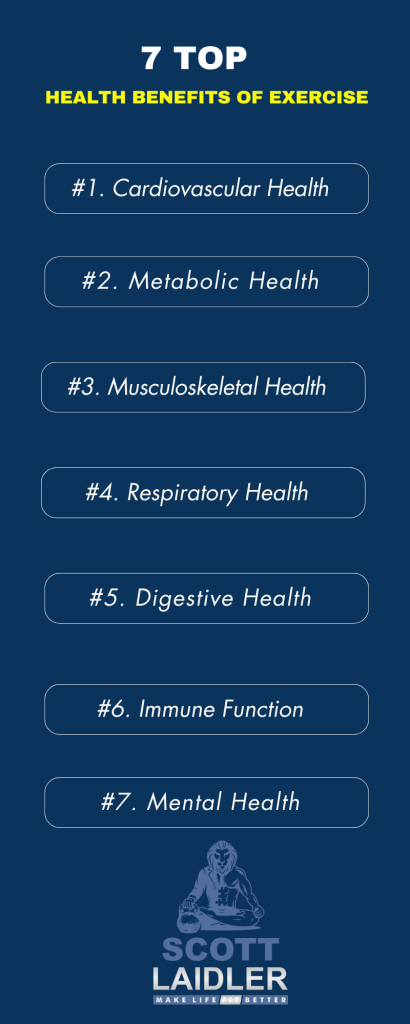
#1. Cardiovascular Health
Regular physical activity is pivotal for cardiovascular health. Exercise helps control blood pressure, reduce triglyceride levels, increase good cholesterol (HDL), and lower bad cholesterol (LDL). By improving heart muscle function and blood flow, you stand to lower your risk of heart disease and stroke, two leading causes of death worldwide.
#2. Metabolic Health
Exercise is a powerful tool for managing metabolic conditions like diabetes and metabolic syndrome. It improves insulin sensitivity, which helps your body regulate blood sugar levels and aids in weight control. Additionally, it assists in maintaining a healthy metabolic rate, which is crucial for overall metabolic health and weight management.
#3. Musculoskeletal Health
Regular physical activity helps improve bone density and muscle strength. This means It aids in preventing and managing osteoporosis and arthritis two conditions that become particularly prominent as we get older. Moreover, it improves balance, coordination, and flexibility, reducing the risk of falls and fractures in older adults, this is important as it is often a slip or fall that sets about a trend of declining health in old age for a myriad of reasons.Â
#4. Respiratory Health
Exercise enhances lung capacity and strengthens the respiratory muscles, promoting efficient gas exchange. It is beneficial for managing respiratory diseases like COPD and asthma and fosters quicker recovery from respiratory infections.
#5. Digestive Health
Physical activity aids digestion by facilitating intestinal movement. It also helps maintain a healthy weight, lowering the risk of gastrointestinal conditions like gallstones, liver disease, colon cancer, and gastroesophageal reflux disease (GERD).
#6. Immune Function
Regular exercise boosts the immune system. It enhances the body’s ability to fight off infections and disease, promoting overall health which may reduce the frequency and duration of time we spend in poor health.
#7. Mental Health
Physical activity has substantial mental health benefits. It aids in relieving feelings of stress, anxiety, and depression. The endorphin release during exercise promotes feelings of well-being and happiness. Additionally, it improves sleep, boosts self-confidence, and provides a healthy way to cope with life’s challenges by developing a sense of resilience.
Cultivating An Active Lifestyle
Navigating the landscape of physical fitness often requires us to distinguish between ‘workouts’ and ‘activity’. This distinction, while seeming subtle, plays a pivotal role in creating an effective, balanced fitness regime.
Workouts are outcome-oriented pursuits that aim to challenge the body and trigger desired adaptations. These deliberate exercises are designed to foster specific changes-whether it’s gaining muscle, increasing strength, or enhancing cardiovascular fitness. They serve as a clear message to our body that we want to adapt and improve. This is why an excellent training program is always walking the line of what we’re capable of giving our bodies no option but to make the desired adaptations.
On the other hand, ‘activity’ refers to those physical engagements we partake in primarily for enjoyment-hiking, cycling, kayaking, and the like. These activities, while beneficial for overall health and certainly capable of aiding in fat loss, aren’t necessarily aimed at specific fitness goals. Their primary function lies in enhancing our lifestyle and promoting holistic well-being.
The significance of differentiating between the two lies in maintaining purpose-driven workouts. When we are clear about what we seek to achieve from our workouts, it provides us with a tangible endpoint. This not only aids in preventing overtraining but also eliminates unproductive expenditure of time and energy. Remember, in fitness, it’s not just about ‘doing’, it’s about ‘achieving’, and understanding this dichotomy between workouts and activity aids us in doing just that.
What About Maintenance?
“Entropy is the natural state of the universe, and any deviation from this chaos requires effort.” – Anonymous
The concept of ‘maintenance’ often arises in fitness conversations on Reddit and forums all over the internet. Many wonder whether every workout needs to be outcome driven or if there’s room for sessions solely aimed at ‘maintenance.’ But what does maintaining physical fitness truly mean? From a nutritional perspective, it might translate to eating at an energy equilibrium, a break-even point, where calorie intake matches expenditure.
However, physical maintenance becomes more complex due to the law of entropy-the principle that everything tends towards disorder over time. In physical terms, our bodies naturally lean towards atrophy and decline without active, goal-oriented intervention. Therefore, even what we perceive as ‘maintenance’ is essentially a battle against entropy, a fight to push back against the slow, inevitable erosion of our physical capabilities.
With this understanding, the necessity for purpose-driven workouts becomes clear. Each workout needs a goal, an intent that directs our efforts, even if that goal is ostensibly to maintain our current fitness level. Conversely, activities can be fun, free from the pressures of purposeful goals and objectives. This is why we draw the distinction: workouts are our shield against entropy, while activities enhance our enjoyment of life.
Understanding the fact that fitness isn’t a ‘level up’ process or a qualification to achieve and then keep without further work, can be daunting, a bit disheartening maybe yet it paves the way to resolving one of the most critical blunders in fitness – the start/stop or all-or-nothing mindset. Understand that monumental changes demand consistency; there’s no way around it. Even more poignant is the idea that even at the pinnacle of your fitness, you’re in an ongoing duel with entropy. You must uphold a certain degree of regular exercise a ‘minimum threshold’ or risk losing your hard-earned gains.
Too often, fitness is mistakenly treated like a video game, where once you reach a new level, it’s yours to keep. Regrettably, natural laws don’t operate this way. Consistency, then, becomes the watchword of your entire fitness journey. To ensure you don’t lose your hard-earned results, your approach to fitness goals must be sustainable year-round. This principle holds especially true when you aim for aggressive weight loss, but it’s applicable to other fitness objectives as well.
The Basic Types Of Exercise
Over time, you may have wondered to yourself, exactly what should be included in a workout program.
Regardless of your fitness goals, it’s often wise to maintain a diverse range of exercise disciplines to avoid creating any easily avoidable vulnerabilities or weaknesses. I’ve learned this lesson through personal experience. In my early twenties, I was extremely focused on weightlifting. Yet, when I participated in a football match, I was entirely unprepared due to my lack of overall fitness. A comment I received during that time was quite an eye-opener, “You go to the gym every day, and you’re not fit enough to play football.” This was especially tough to hear as I was planning on becoming a personal trainer at the time.
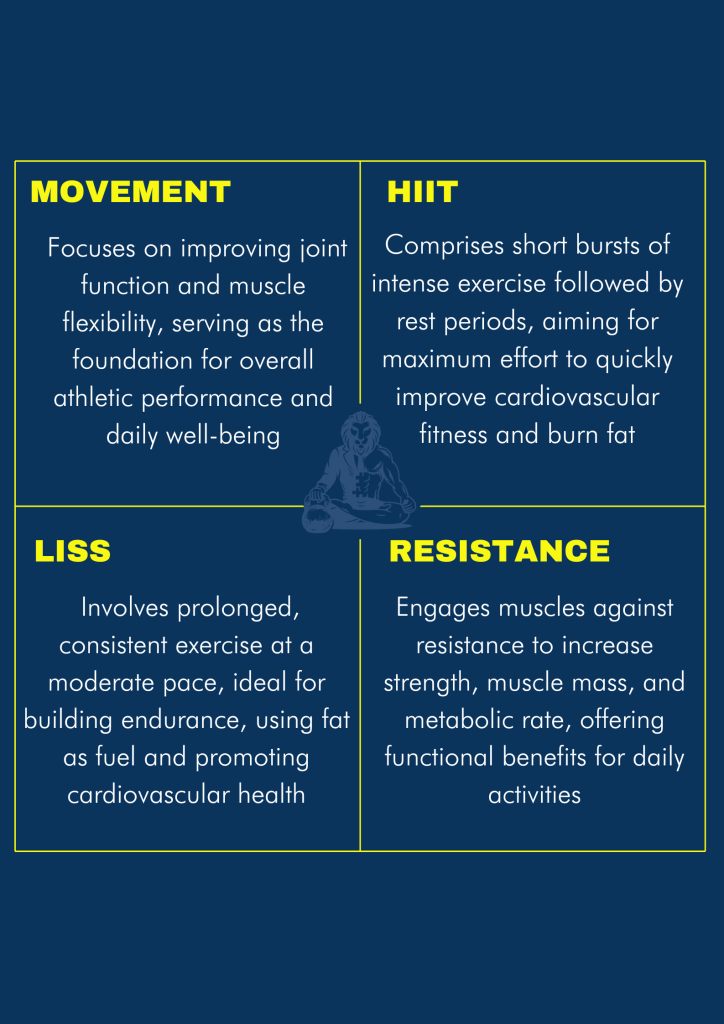
The issue wasn’t that my workouts were ineffective, on the contrary, they were superb for muscle building. However, I had completely overlooked cardiovascular fitness, leaving a considerable gap in my overall physical health and performance. This experience has shaped my approach to training others. No matter what my online personal training clients hope to achieve, I always suggest we approach their training within the context of a specific fitness quadrant. This ensures that all aspects of their fitness are being considered and developed, providing a more well-rounded and sustainable approach to fitness.
Resistance Training
Resistance training, also known as strength training, involves exercises that make your muscles work against a weight or force. This type of training increases the strength, mass, and endurance of your muscles by making them work against resistance. As your body encounters this resistance over time, providing the nutrients and rest are available, it will respond with muscle growth and improvements in strength.
Resistance training can be performed using fitness equipment such as resistance bands, dumbbells, barbells, or indeed your own body weight. Resistance training also contributes to better bone health, aid in weight management, and enhance overall physical function.
Resistance training is a very expansive topic, we’ll discuss how to get the best out of your resistance training for your particular goal shortly.
Cardiovascular Training
Cardiovascular training, also known as cardio or aerobic exercise, is physical exercise of low to high intensity that depends primarily on the energy-generating process. This is the type of training most commonly associated with improving fitness.
Aerobic Training: This is a moderate-intensity exercise that increases your heart rate and respiratory rate to the extent that you can carry on a conversation but would prefer not to. It includes activities like brisk walking, swimming, or cycling. It’s used to improve heart health, increase stamina, burn calories, and reduce the risk of chronic diseases like heart disease and type 2 diabetes.
Moderate Intensity: This type of cardio training involves exercises performed at 50% to 70% of your maximum heart rate. It could include activities such as cycling, brisk walking, or light jogging. This is the zone for increasing your baseline fitness levels for activities like running and cycling for sport.
LISS (Low-Intensity ‘Steady State’): LISS is a type of cardio training where you do any form of low-intensity cardio exercise for a prolonged period, typically 30-60 minutes. This might be a light jog, a walk, or a slow cycle. LISS workouts are meant to be performed at a comfortable pace.
Anaerobic Training: This involves short-duration and high-intensity activities that are performed to the point where the demand for oxygen exceeds the oxygen supply. The exercises could include sprinting, high-intensity interval training (HIIT), and weightlifting.
HIIT (High-Intensity Interval Training): This is a type of training technique that involves quick, intense bursts of exercise, followed by short, sometimes active, recovery periods. It’s used to increase metabolism, improve cardiovascular health, gain lean muscle, and burn fat, there are many different HIIT protocols that we’ll explore shortly.
Movement Training
Stretching and mobility exercises are essential for maintaining flexibility and range of motion. They help to improve your body’s ability to perform exercises with the correct technique and reduce the risk of injuries.
Stretching: Stretching exercises are used to increase the flexibility of your muscles and joints. They can be static (where you hold a stretch) or dynamic (where you move through a range of motion).
Mobility Training: Mobility exercises help to improve the movement of your joints and muscles. They can include a variety of exercises, such as yoga or Pilates movements, and short mobility flows and are used to improve overall movement efficiency. Keeping your mobility optimal is an essential goal if you want to protect your ability to do all of the exercise and activities you enjoy for as long as possible.
Coordination and Proprioception training: These exercises are designed to enhance your body’s ability to move smoothly, and efficiently, and react quickly. Proprioception refers to your body’s ability to sense and understand its position and movement in space, a crucial aspect of balance and stability. Training in this area often includes drills that challenge balance, rhythm, spatial orientation, and timing, and can incorporate tools like stability balls, agility ladders, and BOSU balls. Activities like dancing, martial arts, and sports can also be great ways to improve coordination and proprioception, making this a fun and varied component of a well-rounded fitness regimen.
Basic Exercise Glossary
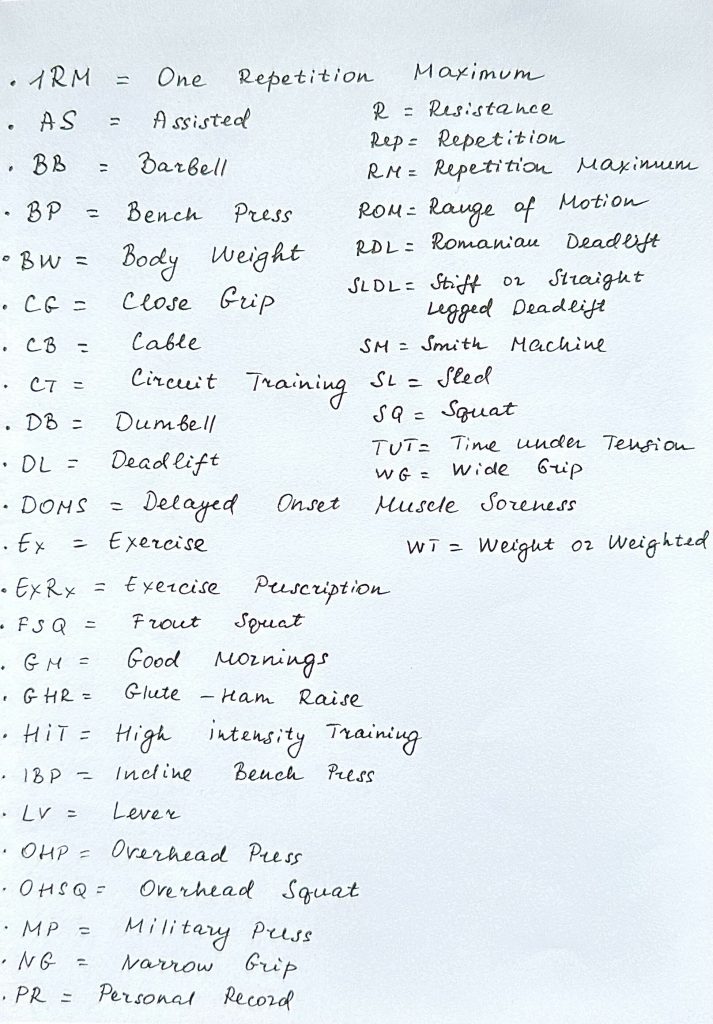
These are the 8 terms I think you’ll come across most often in health & fitness, both in terms of my own writing and also in your wider research in the pursuit of your goals. Becoming familiar with these really helps read and understand workout programs and what they are asking of you:
Exercise: An singular activity requiring physical effort, carried out to sustain or improve health and fitness. In the context of a workout, an exercise refers to a specific movement intended to work a certain group of muscles. For example, in a given workout you may have 5-10 different exercises.
Set: A set refers to a series of repetitions of a specific exercise done consecutively without pausing. For example, we might say that we will be doing the squat exercises for 4 sets of 10 repetitions. The number of sets in a workout is a vector through which we can influence volume and training load, important variables that we want to be able to use to our advantage.
Rep (Repetition): A rep or repetition is one complete movement of a particular exercise. For instance, one push-up or one squat would be considered one rep, within a given set. The number of repetitions in a set is very important and changing this number can completely transform a workout.
Rest Interval: The rest interval is the time spent resting between sets or exercises to allow for recovery. The length of rest intervals can vary depending on the intensity of the exercise and the individual’s fitness level. It is also another vector at our disposal to change the impact of a workout, for example, the same workout with the same exercise selection, number of sets, and at the same rep range would be completely different with a 30-second rest period in comparison to a 2-minute one.
Over-training: Overtraining is a physical, behavioral, and emotional condition that occurs when the volume and intensity of an individual’s exercise exceed their recovery capacity. It’s a state of chronic fatigue, decreased performance, and increased risk of injury. It’s important to name this occurrence because it highlights that there is not always a linear relationship between more work and better results. Professor Greg Whyte OBE and I discuss overtraining symptoms on my podcast here.
Progressive Overload: Progressive overload is a principle of physical fitness that involves gradually increasing the volume, intensity, frequency, or duration of training. This is in order to challenge the body sufficiently enough to promote muscular adaptations. This can be achieved by increasing weight, performing more reps or sets, decreasing rest time, or increasing exercise frequency or duration. Failing to maintain progressive overload over a course of training would undermine your results if you were seeking an increase in muscle mass or strength.
Active Rest / Deload: Active rest, also known as a de-load, is a period where you deliberately decrease the volume or intensity of your training to allow your body to recover. Rather than completely stopping training, you reduce the workload to let your body rejuvenate while still staying active. Periods of complete inactivity usually aren’t useful or warranted unless you’re actually ill or injured, it would also break an exercise habit which for many has been hard won to establish, with strategic active rest you can get the benefits of rest and recovery without losing your momentum.
Training Phase: A training phase, also known as a training cycle or periodisation, is a planned approach to training that involves the progressive cycling of various aspects of a training program over a specific period. It’s designed to optimise performance while minimising injuries. There are three types of training phases.
Microcycle: This is the smallest unit of time we would use within a period or periodisation, and might refer to a week of training for example.
Mesocycle: A mesocycle refers to a particular training block, which for an athlete might determine a specific focus synch as endurance, or for a bodybuilder a switch in the protocol being used to achieve the same goal.
Macrocycle: A macrocycle refers to a longer time period, for example, it’s common for Olympic athletes to work in 4 or 8-year macrocycles to prepare to peak for and compete at the Olympic games.
I have interviewed a number of Olympians about their training insights on my podcast including, Dame Jessica Ennis DBE, Professor Greg Whyte OBE, Sarah Lindsay, Chemmy Alcott, and Rowan Cheshire.
Whilst we might not all be thinking that far ahead, it is important to understand training cycles, because it helps to avoid another common pitfall in fitness, which is thinking that any one training program is going to be enough to get you to your goals and maintain your results, you have to switch up training phases regularly to keep giving your body a reason to adapt.
How To Get Results With Exercise
When we think of most workout programs or ‘courses’ we tend to have quite a binary thought process as to whether something works or not. You may even reflect on previous attempts and classify them as having been unsuccessful, despite having put a lot of effort in.
Every fitness goal has it’s own nuances, understanding them might be the difference between success and failure. The more you understand, the more control you have and the better position you’ll be in to predict whether any program you’re about to embark on is going to be successful.
To aid you in this, let’s do a deep dive into the five most common fitness goals I’ve helped my online personal training clients achieve. Once you’ve worked in fitness as long as I have, you tend to see patterns and the truth is that each goal tends to have
4-6 points that are common mistakes, easy to make. Once you’ve been made aware of what can go wrong, you’ll be able to avoid it and start getting excellent results.
Before we go into the weeds with the nuance of each training goal, let’s discuss 4 basic principles that will lay the framework for achieving any fitness goal:
Selecting The Right Tool For The Task
Whilst it’s true that maintaining any regular exercise practice is going to be good for you and deliver a number of health benefits, it’s also worth noting that what it might take to stay fit and active might be different on the kind of training you would need to do to achieve your goal, for example, let’s say you love hiking but want to gain upper body strength, whilst hiking will keep you lean and fit, it’s going to to do very little to help you achieve your strength goal.
It’s a delicate balance between doing the kind of training that will get you to your goal vs the kind of training that you might enjoy most. For example, this is why I believe so many people love CrossFit, Hyrox competitions, and Spartan races, they are fantastic vehicles for those who are in great shape to express themselves physically.
An effective exercise program should be aimed at getting you from A to B, so it’s essential that it calls upon the appropriate tools for the job. For example, let’s say you love yoga but want to be able to do a pull-up.
Whilst it’s great that you have a regular yoga practice, it isn’t going to help you develop pulling strength, because on a yoga mat, you can push, but there is nothing to pull, it’s Yogas blindspot, so you would need to re-tool, which could either be done through resistance training or migrating your yoga practice over to a form of aerial work, where an opportunity to pull your own body weight would be available, without this pivot it really doesn’t matter how good you ever got at yoga, you would be unlikely to be able to do a pull-up.
For this reason, if you want to see specific changes in the body it’s important to make sure that the types of exercise and workouts in your program specifically contribute to what you’re looking to achieve.
This actually raises another important point, which is that once you are well versed in the different types of exercise, you’ll have a good read on where you stand with each of them, this kind of compartmentalisation can be very useful.
For example, let’s say you’re a keen runner, you’ve completed a number of full-distance marathons and could easily turn up to a 10k any day of the year with your base fitness level, you’d probably consider yourself an advanced exerciser, but again, let’s say you want to introduce a strength goal and have never done any resistance training before, contextually you are now a beginner, despite the running background, it’s important to know and communicate this or you might be expected to have a certain understanding or level of conditioning there is no way you could have, which might undermine your progress.
Consistent Implementation
If I could only give you one tip in fitness, it would be to stay consistent. You could have the perfect workout program, but if you’re not actually implementing it consistently, it won’t yield the desired results. Whether it’s a daily half-hour workout or longer sessions a few times a week, choose a regimen that fits your schedule, and stick to it.
Something to look out for is identifying yourself as someone that is ‘all or nothing’ when it comes to your exercise regime, this may have gotten you through an exam or helped you in your career in the past, but in the world of health & fitness, I’m sorry, unfortunately, it isn’t going to work.
This is because the law of entropy acts on muscles, bones, and cardiovascular fitness, i.e. when you aren’t using these things, you’ll start to lose them. After all, ‘nothing’ is not maintenance, of course, you’ll never lose everything overnight, but long or frequent periods of inactivity could see you lose your hard-earned achievements. And on the other side of the coin ‘All’ can rarely be maintained for long, and is inevitably going to lead to an inflexible approach that will result in burnout.
Progress Must Be Achieved In a Sustainable Manner
If you want to be able to maintain your results year-round, you must have achieved them in a way that is sustainable. Sustainability is crucial for long-term success. It’s better to adopt a moderate, maintainable fitness routine than to start an overly exhausting or restrictive one that you give up on after a few weeks. Even if you are successful with such an extreme approach, no realistic habits will have been established so you have no real framework to rely on. For example, you probably remember weight loss gameshows like the biggest loser, contestants in these shows often regained lost weight, and actually put on more after these shows.
The ideal program is one that challenges you but is also realistic and considerate of your lifestyle, abilities, and interests. I tend to operate on the basis that results only count if you can keep them, and whilst aggressive dieting or overly aggressive training programs can seem like they’ll produce results, often any positive effects are short-lived as they massively increase the likelihood that you’ll encounter burnout or revert back to old ways once you’re lack of energy and hunger become intolerable.
You Must Have a Lifestyle to Match Your Goal
The lifestyle you like to keep is going to play a massive role in your fitness journey. By lifestyle I mean everything from your diet and sleep habits to how you deal with stress and the amount of daily activity you like to set as your baseline. For example, if you’re trying to lose weight, but you’re eating junk food and watching TV every night or you want to gain muscle but don’t value a good night’s sleep, your workout program will yield poor results despite the fact that you’re completing your workouts.
It’s always a great idea to audit your lifestyle before starting out on a new fitness regime, to see whether there are elements of your lifestyle that are going to hold you back, this is also worth discussing with your fitness coach if you go on to hire one, for example, let’s say you sign up to my online personal training service looking to gain muscle, but also tell me that you aren’t sleeping well and are experiencing a lot of stress, then I would suggest we use a low volume, high-frequency approach to your training in order to manage fatigue, whereas if you were to read a bodybuilding magazine and do what you read the professionals are doing, you would likely take on an aggressive 6 day training week which might be a great program, just not for you, right now.
Your fitness journey is unique to you. The ‘right’ program is one that caters to your specific needs, interests, and goals, and is something you can sustain in the long run. It may take some time and experimentation to find this balance, but once you do, it can lead to lifelong health and fitness benefits that you can actually maintain.
The Most Common Exercise Goals
There are 5 basic health & fitness goals. Ranging from purely aesthetic to health-focused. Each goal should be approached in a unique way and has common pitfalls to look out for.
Let’s explore the goals one by one:
Weight Loss (Fat-Loss)
Experience has shown me that weight loss and fat loss can effectively be considered the same goal, not because they are the same thing technically, but because there would be no real utility in pursuing a weight loss goal that measured success by any other unit than fat loss.
Anything else would be losing muscle, which would be a mistake, or the realm of losing water, for example in order to make weight for an event, fighters use hydration manipulation and will often weigh 20lbs or more 24-48 hours later once they have fully rehydrated on fight night, so much so that there are now ‘rehydration clauses’ in fight contrasts to limit the extend of this and protect the fighters. So you can see that this would never present a long-term solution.
Therefore let’s agree that for all intents and purposes, they are the same thing, but should be approached differently depending on how far you are from your desired outcome. If you have a lot to lose it’s a weight loss goal, and if you are already pretty lean, you have a fat loss goal.
I say they are one and the same because technically with a weight loss goal you are looking to see a lighter weight on the scale each time you return to it, However, it is only going to be of utility to lose body fat on the scale. As a thought experiment, let’s say you want to lose weight, and you joined a traditional 1990s weight loss group to help you achieve it, Knowing there was an impending weigh-in coming you had deliberately undereaten all week, which meant you’d under-rated on protein. At the end of the week, you attend the weigh-in and you’ve lost 2kg on the scale. In this setting, with this approach to weight loss, your result would be celebrated, and you would be encouraged to continue doing the same thing.
However under closer inspection, with the help of a Dexa scan we might be able to determine that due to undereating and not exercising in the right way, you’ve actually lost muscle mass. This means that the weight loss you are celebrating is arbitrary, all that has happened is that you’ve slowed your metabolic rate, meaning you can now eat even fewer calories to break even. Yes, you now weigh less, but because you have lost lean mass, as a ratio measurement you now have a higher body fat percentage.
It’s for that reason that weight loss should be seen as a by-product of fat loss + muscle preservation, if there is more weight to lose you will see faster weight loss. If you can internalise that distinction, you will massively increase your chances of success.
Of course, there are differences in how weight loss and fat loss can be approached, whilst they will typically both be in a deficit for the week, weight loss usually works on a -20/-30% caloric deficit, whereas fat loss works on a -10/-20 deficit, calculated from basal metabolic rate adjusted to your level of activity.
One of the big differences between how weight loss and fat loss could be approached is by taking into consideration the amount of weight to lose and what that means for the individual trying to lose it, for example, an individual with substantial weight to lose may not feel as comfortable with higher impact activities or running for example as someone who is simply aiming to lose stubborn belly fat, as a further example we could say sprinting is about as effective as it gets for fat loss, to me there is no finer workout, but it just wouldn’t be appropriate for everyone on a weight loss journey.
Weight Loss To Fat Loss An Evolving Goal
One of the biggest helping hands I could ever give you with regard to a weight loss goal is that on a long enough timeline, a larger weight loss goal will by definition become a fat loss goal, this helps you not overreact to a slowing in weight loss once you’ve bedded in your new lifestyle for a while which is a huge mistake and undermines the progress of a lot of people.
Imagine you start a new weight loss journey and in the first week, you lose 3kg – a solid start! In the second week, you maintain the pace and drop another 3kg. But by the third week, your weight loss slows down to just 1kg. That’s only a third of what you were losing before, and it can feel discouraging. In response, you might feel the urge to drastically cut more calories and ramp up your workouts. But, doing so can harm your lean muscle mass and potentially make it harder to stick to your routine.
It’s important to understand that a slowdown in weight loss after the initial weeks is totally normal. Early on, you’re picking the low-hanging fruit. But as you progress, the weight you’re losing tends to be more from actual fat, which is exactly what you want. So, don’t mistake ‘slow progress’ for ‘no progress.’ Adjust your strategy only if your progress truly stalls.
You might consider that at a certain stage of progress, you no longer have a weight loss goal as you’ve qualified to measure progress in body composition changes, rather than what’s on the scale.
But above all, remember that the key to sustainable weight loss or fat loss is consistency, not speed.
Read my full guide to weight loss here where I explore the 6 main mistakes that are made in weight loss programs and how to overcome them.
Recomposition
Recomposition is an area of contention within the fitness industry some saying that it’s possible and others that it’s not. I can tell you with certainty that recomposition is possible, just look at the results on my website.
In my view, the reason that it’s even argued, is that those that would get into such a debate and back their opinions are usually highly trained bodybuilders and fitness enthusiasts seeking marginal improvements in either their muscularity or leanness, but there belies a fatal blindspot, which is that 99% of people are nowhere near their genetic potential for muscularity, nor do they have a track record, let’s say even over the last 90 days of perfect execution of an exercise and nutrition plan, let alone the years if not decades of consistency it takes to maximise your potential.
Which means, really both answers are right, for the 1% is recomposition on the table? Likely not. But for the other 99%, the answer is contextual and essentially comes down to how much low-hanging fruit there is on the table.
Which for the majority of people is a huge amount. In my experience, recomposition is often the right move for you if you consider yourself in the unfortunately named ‘skinny fat’ or ‘dad bod’ archetypes as both of these situations indicate to the trained eye that you’re either not training consistently enough, not eating well or are trying hard but don’t yet really know how to get the best out of your training efforts.
If you answer no to any of the following questions then as a personal trainer I’d be confident training you for a recomposition goal:
- You know exactly how much to each and what to eat and have been doing so consistently for at least the last three months
- You have consistently exercised for the past 2-3 years, tracking workouts and varying training programs at least every 8 weeks
- You ensure that in every workout you make incremental and demonstrable performance increases via progressive overload
- If you are honest with yourself, there is no way you could have had better eating or training habits over the last 90 days
So as you can see, most people are excellent candidates for recomposition, which is great.
You can learn more about how to achieve a body recomposition here with my comprehensive guide.
Muscle Gain (Hypertrophy)
Building muscle is most often approached as an aesthetic goal, but the right amount of muscle may also improve sporting performance and from a health standpoint, increasing your lean muscle mass may help reduce risk factors for major diseases.
Unfortunately, I’ve seen a lot of wasted efforts in the pursuit of gaining muscle, typically this is because of a lack of understanding of the mechanisms behind muscle gain. It’s easy to get to the gym and spin your wheels, thinking that you’ll gain muscle but if all of the right elements of the equation aren’t in place, that’s unlikely to happen for you.
How Hypertrophy Works
When you are starting your fitness journey, It can be difficult to know which workouts are going to lead to muscle gain and which aren’t, I find that it helps to look at things from an evolutionary standpoint. Our bodies are evolved to be highly efficient survival machines, it takes energy to gain muscle, and it will then cost additional energy every day you maintain it, this energy has to be brought in, in the form of calories. In the natural world energy is hard to come by (at least it was for hundreds of thousands of years as we evolved) which means our bodies have not evolved to waste it.
Gaining muscle mass requires considerable energy to happen (think calorie surplus) so you have to give your body a good reason to adapt. Effectively our body needs to be saying to itself “Well if we’re going to be doing this again, we better get more efficient at it, it might be a matter of survival” In order to become more efficient, an increase in muscle mass and strength will be the physical response so that your body is much more efficient for carrying out the same action next time. If you can consistently send these signals and meet them with the right nutrition intake and rest, you are guaranteed to gain muscle.
Muscle Building Workouts
Generally speaking, you can gain muscle using a rep range of anywhere between 1-20 reps, with the general sweet spot being 6-12 reps. Usually, when you begin with resistance training, you will utilise a rep range of 10-15 rest which is more to do with lowering the risk of injury by using lighter weights whilst your body is getting familiar with the new exercises.
Once you have your workout protocol in place, results won’t come from static training. Your body will adapt to any given stimulus very quickly. The most efficient way to do this is to work on marginal advancements, to give the body just enough reach and adapt to in each workout without overwhelming it, this process is known as progressive overload and is essential to the muscle-building process.
You can learn more about gaining muscle in my comprehensive guide here
Improved Health & Fitness
“Health” and “fitness” – Are words that are often thrown around interchangeably. However, there’s a subtle nuance between them. Think of health as a reflection of your body’s overall condition, free from disease. Fitness, on the other hand, is about your physical performance, encompassing factors like muscular strength and endurance, cardiovascular health, flexibility, and body composition.
There’s a prevalent myth that health and fitness are two peas in a pod – always aligned. But that’s not necessarily the case. Imagine a high-strung executive who crushes a 10k run daily, only to suffer a heart attack down the line. This individual may have been fit but was not necessarily healthy. Hence, factors like stress, fatigue, and recovery play a significant role in the overall health equation. It’s not just about what we can force our bodies to do; it’s also about how we nourish and rest them.
My approach to improving health and fitness encompasses regular cardiovascular exercise, utilising resistance training, encouraging activity and movement whilst keeping a balanced diet, and defending the time and space necessary for adequate rest.
This strategy doesn’t just involve losing weight or gaining muscle but focuses on improving heart health, building strength and endurance, boosting your immune system, reducing stress, and improving sleep.
This is not about a short-term solution or a crash diet, It’s about establishing lifelong habits that will keep you healthy and fit for years to come. My programs aren’t about restriction or punishing workouts, but rather they’re about sustainable changes and finding the joy in movement.
From my perspective, if you’ve recently been inactive or are recovering from a period of exhaustion or burnout, a program aimed at boosting both health and fitness could be beneficial. It’s essential to regain balance before diving into regimes that demand a caloric deficit, like weight loss, or ones that could strain the central nervous system, like muscle building. To cater to this need, I’ve designed the ideal all-inclusive initiation program into fitness. You might consider it the universal on-ramp to all of your future training goals, I’ve called it my Healthy Ambition program.
For the full guide on how to truly increase your health & fitness, click here
Enhanced Sports Performance
Improving your performance in sports hinges on tailoring your training to your specific game. Once you understand the movements that apply to your sport, repetition becomes your key tool. Consider Mike Tyson, throwing the same punch a thousand times, or professional tennis players dedicating countless hours to rehearsing shots they’ve been perfecting since childhood.
To make meaningful improvements in your game, sometimes it’s necessary to look beyond sport-specific training. Strength and conditioning, mobility exercises, recovery techniques, and nutrition are essential elements that might occur in a gym environment, but they’ll eventually enhance your sports performance once your body adapts to them.
Whether you’re a runner aiming to cut down your times, a footballer seeking more strength and agility, or a cyclist wanting to push your endurance, you can break down the muscular usage and movements required in your sport and integrate them into a workout plan that enhances your skills.
By blending strength and conditioning exercises, recovery sessions, mobility work, and appropriate nutrition into a supplementary workout program, you’ll be able to drive your sports performance to a new level.
Sports-specific training also plays a crucial role in reducing the risk of injury and improving your overall athletic capabilities. The goal is to cultivate a well-rounded athleticism and robustness that not only aids your sporting performance but also keeps you fit for life outside your sport.
Remember, sports performance training differs greatly from bodybuilding and general fitness training. Whereas fitness training often focuses on changing your appearance, sports training aims to enhance your body’s capabilities. For this improvement to occur, sufficient eating and proper recovery are crucial, which is why trying to juggle sports goals with other goals like muscle building or weight loss may not always work.
How To Create A Workout Program
Creating an effective workout program is a pivotal step toward achieving your fitness goals. Many attempts to transform their health and body shape without a solid strategy, often leading to frustrating stagnation or, worse, over-training and injury.
When you don’t yet understand the mechanisms behind why certain aspects of exercise will or will not work for you it’s easy to default to the assumption that more exercise or harder training will have a linear relationship with better results, this is rarely the case.
A properly crafted workout program gives structure to your fitness journey, providing clear direction and measurable targets. It ensures you’re engaging in the right exercises, at the right intensity and frequency, to achieve your specific desired results. Whether your aim is weight loss, muscle gain, enhanced cardiovascular fitness, or improved sports performance, a tailored workout program is your roadmap to success.
I have created a 30-day fitness challenge to help you get started on your fitness journey.
Anatomy of a Workout
As you advance beyond the beginner level in your fitness journey, understanding that each element of your workout is not random but rather a carefully selected variable becomes crucial.
This understanding can significantly influence your progress and results. The choice of exercises, the number of sets and reps, the tempo of each movement, the rest interval, and every aspect is deliberate and crafted to serve a specific purpose. Mastering how and when to adjust these variables can mean the difference between stagnation and achieving your fitness goals. I’ve created a guide to the anatomy of a workout to help you through this process.
The Anatomy of a Workout – How to tell is a workout program is effective
As we delve deeper into the intricacies of a workout program, we start to run into a series of unique factors that can, and should, be personalised for optimal results. Whether you’re a personal trainer designing personalised workouts for your clients or an individual crafting your own fitness plan, awareness and optimisation of these variables can be the difference between getting results or not.
These elements go far beyond the basics; they’re the fine details that tailor a program to an individual’s needs and preferences, ensuring it’s as effective and efficient as possible.
They range from physical preferences and tolerances for intensity and discomfort to psychological variables such as a desire for diversity in training and tapping what an individual finds most motivating.
I’ve created an advanced guide to program creation which is the exact process I use in my online personal training service and now teach newly qualified personal trainers in my FitPro MBA program.
My 28-Step Personalised Workout ProgramProcess
The Coaching Process
Enlisting the help of the right coach is like discovering a hidden key, one that opens the door to realising your full potential in achieving your fitness aspirations. It’s more than just someone feeding you workout regimens or diet plans. Instead, it’s an all-encompassing, personalised journey that truly accounts for your individual body type, lifestyle, and fitness goals.
The ideal coach doesn’t just guide you around obstacles but propels you to confront them head-on, instilling a sense of discipline and promoting a rhythm of consistency in your routines. Their influence sparks a transformation that resonates beyond your physique, shaping a resilient mindset towards health and fitness. Coaching enlightens you, paving the way toward a profound understanding of your body and its unique health needs.
What’s more, engaging a coach brings with it the indispensable boon of accountability. Your fitness journey is no longer a solo expedition. You have someone constantly in your corner, monitoring your progress, setting benchmarks, and constructively critiquing your efforts. This constant oversight encourages you to stay on track, adhering to your fitness plan and pushing you to strive even when motivation wanes.
In essence, coaching integrates motivation, education, and accountability into your fitness journey, ensuring your efforts are not only effective but also sustainable. In the grand scheme of things, a coach transforms from being just a guide to an essential ally in your quest for health and wellness.
I’ve outlined the coaching process I’ve developed in my online personal training service here
How Does Age Influence Fitness Training?
If you’re worrying about age being an impediment to achieving your fitness goal, let me reassure you, it isn’t. Just check out my results, I’ve seen excellent results with my clients in their 50s & 60s and beyond.
You’ll often read that as we age it gets much harder for our bodies to hold off weight and adapt to exercise, believe me, whilst this is technically true, it’s not only massively over-exaggerated, the decline is so slow that it’s best measured in decades, for example making a loss of muscle mass at between 3% and 5% every ten years, hardly anything to worry about in the scheme of things.
Next, you’ve got to consider that a rate of decline is only relevant in relation to your optimal, so put it this way if you’ve spent your whole twenties in peak physical condition, consistently training and absolutely maximised your genetic potential, then you will see a slight decline with each decade you stay consistent, again hardly anything to worry about, you’ll already be in fantastic condition and you’ve proved you have the skills to make any decline as slow as it possibly can be.
But of course, for most people that isn’t the case, so what matters now is that you maximise what you are capable of today. Let’s say you’re in your forties and you never really put the time and effort in during your twenties and thirties, well that means that despite technically having a slightly lower total potential, if you are diligent now where you personally could be in 5 years will far exceed the heights you achieved in your twenties and thirties, it’s all relative, you should just begin where you are now and stay consistent.
Anyway, even if it were true that your ability to get results has been hampered by your age, what would you do, not try? That would be a guarantee of getting nowhere. The only empowering decision you can make is to begin today, optimise your training efforts and stay consistent. Believe me, if you do that, you stand to far exceed what you previously felt capable of, no matter your age.
Age-based Strategy
Age is but a number, especially when it comes to fitness and exercise. There’s a common misconception that as we age, we become less capable of physical feats and reaching new heights in our fitness goals. This couldn’t be further from the truth. While our bodies do experience changes as we grow older, these changes do not necessarily dictate the boundaries of our potential. It’s more about adaptation and strategic modifications rather than surrendering to age.
Our bodies are incredibly adaptable, regardless of age. They respond to the stimuli we expose them to; therefore, with the right approach, we can maintain a high level of physical fitness well into our later years. Age-based decline often gets overexaggerated, potentially demotivating individuals from pursuing their fitness goals, for example, take a look at the results many of my clients are getting into their 40s 50s, and beyond.
However, the power to redefine what aging looks like rests in our hands.
Adaptation is the key. As we age, we might need to adjust the intensity, frequency, or types of exercises we engage in, but this doesn’t mean we have to limit ourselves. For example, if you’re a marathon runner, you might opt for shorter, more frequent runs instead of long, strenuous sessions. Or, if weightlifting is your thing, you might find that lighter weights with more repetitions work better for you as you age.
Recovery and rest also play more significant roles. We might find that our bodies require more time to recover from workouts as we age. This isn’t a setback; it’s just an opportunity for us to focus more on rest and recovery techniques, which are integral aspects of overall health and well-being anyway.
Another pivotal point is nutrition. As we age, our nutritional needs can change. Being mindful of our diet and ensuring we get all the necessary nutrients can greatly assist our fitness journey. Coupled with regular exercise, a balanced diet can help slow down the effects of aging.
The beauty of exercise is that it’s never too late to start. Numerous stories highlight individuals who took up new physical activities in their later years and achieved remarkable success. Whether it’s bodybuilding, running, or yoga, age is no barrier to starting, improving, and excelling.
In conclusion, age should not be viewed as a hindrance to fitness goals. Instead, it should be seen as an opportunity to adapt and grow, to explore new avenues and techniques, and to show that age really is just a number.
Whilst we would be remiss not to acknowledge age-based challenges like peri/menopause, with the right mindset, appropriate adaptations, and a commitment to our health, we can continue to achieve great things throughout all stages of our life. Remember, our potential is not dictated by the number of candles on our birthday cake. Rather, it’s determined by our will, our resilience, and our determination to keep pushing, keep adapting, and keep achieving.
I have written a guide to How to get fit in your 20s, 30s, 40s, 50s, and 60s & 70s which will help you make the appropriate adjustments to your training based on the stage of life you’re in.
How Lifestyle Choices Impact Your Fitness Goals
How Does Nutrition Affect Exercise?
Food is the fuel that powers our bodies, and when it comes to exercise, the quality and quantity of that fuel can make a substantial difference to our performance and results. If you’re serious about achieving your fitness goals, it’s essential to pay attention to your nutrition.
Let’s start with energy. When you work out, your body needs a sufficient supply of energy to keep you moving, and this energy comes from the food you eat. A well-balanced diet with the right mix of carbohydrates, protein, and fats ensures you have the stamina to make it through your workouts without feeling depleted.
However, fueling your workouts is only one part of the equation. The food you eat also plays a pivotal role in recovery and adaptation. The processes that help your body bounce back after a workout and get stronger over time. Protein, for instance, is crucial for repairing and building muscle tissue, especially after strength training. On the other hand, carbohydrates replenish the glycogen stores in your muscles, helping you maintain your energy levels for your next workout.
Beyond energy and recovery, the balance of calories and macronutrients in your diet can significantly impact the type of changes you see in your body. If you’re looking to lose weight, you’ll need to create a calorie deficit.
That is, consume fewer calories than you burn. If you want to gain muscle, you’ll likely need a calorie surplus, particularly with a focus on protein intake, think of them as building blocks.
Moreover, the timing of your meals can also influence your training results. Eating a meal rich in protein and carbohydrates after a workout, for instance, can optimise muscle repair and growth.
In a nutshell, if you want to get the most out of your training, you can’t ignore your diet. Good nutrition isn’t just about eating healthy foods; it’s about eating the right foods, in the right amounts, and at the right times to support your fitness goals. Remember, exercise and nutrition are two sides of the same coin you can’t truly succeed with one without paying attention to the other. So, fuel your body wisely, and watch it thrive.
How Does Stress Affect Exercise?
Stress takes a toll on the mind and body, a fact most of us are well aware of. But did you know that it also impacts the effectiveness of your workouts and fitness progress? You see when you’re stressed, your body produces high levels of cortisol, a hormone that can have negative effects on your fitness journey.
Cortisol is a tricky hormone. It’s needed in certain amounts for normal bodily functions and actually has a role to play in mobilising energy to fuel your workouts, but when there’s too much of it in your system, it becomes a problem. High cortisol levels can lead to muscle loss and hinder your ability to become leaner as it not only makes it harder to shed body fat, it can actually promote the storing of it, making it a significant impediment in the way of your fitness goals. As if that wasn’t enough, in excess cortisol is an overall catabolic hormone which can decrease lean body mass and increase energy expenditure.
The irony is, when we’re not seeing the results we desire, we often resort to pushing our bodies even harder, cutting back on calories, or ramping up the intensity of our workouts. Unfortunately, these are also forms of stress, and they further escalate the cortisol levels in our bodies. It becomes a vicious cycle – the more we push, the more stressed we become, and the less progress we see in our fitness journey.
The lesson here is that success in health and fitness is as much about managing stress as they are about exercise and nutrition. Yes, exercise can be a fantastic stress reliever when done right. It releases endorphins, the body’s natural feel-good hormones, and can help create a sense of calm and well-being. However, when overdone, it can contribute to the problem instead of alleviating it.
So, how can we strike the right balance and break this cycle? By making stress management a core component of our fitness regime. This means not just focusing on our workouts and diet, but also ensuring we’re getting enough sleep, practicing mindfulness, and incorporating cortisol-lowering relaxation activities into our daily routines.
Remember, the journey to fitness isn’t a race. It’s a balancing act where you need to look after both your body and mind. So, keep your stress levels in check, listen to your body, and be patient with your progress. It’s all part of the path to achieving optimal health and fitness.
How Does Sleep Affect Exercise?
Sleep is more than just a time for your mind to unwind; it’s when your body takes center stage to heal, repair, and strengthen itself. Ever wonder why you feel so refreshed after a good night’s sleep? That’s because your body has been hard at work recovering from your training sessions.
You see when you’re at the gym lifting weights or doing squats, you’re essentially creating micro-tears in your muscle fibers. These tears might sound alarming, but they’re actually a good thing. It’s through repairing these tiny tears that your muscles grow stronger and bigger. And guess what? This repair and recovery process primarily happens while you’re sound asleep.
In other words, if you’re skimping on sleep, you’re also missing out on crucial recovery time. Lack of sleep leads to inadequate recovery, which can result in poor exercise performance, slower progress toward your fitness goals, and an increased risk of injuries. It’s a bit like trying to build a house without giving the cement enough time to set; the structure just won’t be as strong or stable.
Moreover, sleep deprivation can disrupt the balance of important hormones in your body that are related to appetite, metabolism, and muscle recovery. So, not only does sleep deprivation affect your physical performance and recovery, but it can also influence your dietary choices and hinder weight loss.
The takeaway message here is that sleep is a non-negotiable part of a successful fitness regimen. It’s just as important as your diet and workouts, so make sure you’re getting enough of it. Aim for at least seven to nine hours of quality sleep each night. This will provide your body with ample time to recover and prepare for the next day’s challenges.
In summary, if you want to get the most out of your fitness efforts, don’t forget to catch those precious Zs. Remember, it’s not just about the work you put in at the gym, but also the recovery you allow your body afterwards. And a big part of that recovery happens when you’re tucked up in bed, sleeping.
Essential Fitness Reading List
Embarking on a new health & fitness initiative can be an exhilarating, yet sometimes confusing experience. With countless exercises, methods, and advice out there, it can be challenging to know where to start or how to continue making progress. This is where fitness books can be of great help. They serve as comprehensive guides, filled with knowledge and tips from some of the best minds in the industry. From explaining the basic principles of exercise and nutrition to providing in-depth workout programs and lifestyle advice, these top fitness books are valuable resources that can support you at every step of your fitness journey.
Becoming a Supple Leopard: The Ultimate Guide to Resolving Pain, Preventing Injury, and Optimising Athletic Performance” is more than just a book, it’s a complete guide for anyone looking to understand and improve their body’s functionality and performance. This book is a game changer for people who are suffering from chronic pain, those who want to avoid future injuries, and those who want to enhance their athletic prowess. Written by renowned physical therapist Dr. Kelly Starrett, it presents a comprehensive approach towards movement and mobility, teaching you how to move properly in daily life as well as in high-level athletic performance. From office workers to elite athletes, this book offers invaluable insights and practical advice on how to maintain your physical health and optimize your performance.
Rebuilding Milo: The Lifter’s Guide to Fixing Common Injuries and Building a Strong Foundation for Enhancing Performance” is an invaluable resource for anyone engaged in strength training or lifting sports. This book, written by physical therapist and strength coach Dr. Aaron Horschig, is a veritable treasure trove of knowledge for anyone looking to not only recover from common injuries but also to prevent them in the first place. The book provides clear, detailed instructions and illustrations for addressing issues from the feet to the neck. By helping you understand the root cause of your pain and providing targeted, scientifically-backed solutions, it enables you to build a resilient body ready for enhanced performance. This book is not just for those currently suffering from injuries but for anyone who wants to fortify their body against future problems and build a strong, sturdy foundation for lifting and life.
Starting Strength –3rd edition by Mark Rippetoe
Starting Strength: Rippetoe is a cornerstone in the world of strength training. This revered text demystifies the core principles of barbell strength training, making it accessible to both novices and seasoned weightlifters alike. As a reader, you will embark on a journey where Rippetoe’s extensive knowledge and decades of experience guide you through the art and science of building strength with barbells. This third edition adds to its predecessors with more detailed explanations, expanded exercise guides, and refined training methods – all with the objective of optimizing your strength and fitness potential. If there’s one book that belongs in the library of every serious strength trainee, “Starting Strength” is it.
9 Principles for Success in Fitness
Follow Chesterton’s Fence
This principle is derived from an allegory by writer G.K. Chesterton. The allegory suggests that if you purchased some land then came across a fence and you don’t understand its purpose, it’s wiser to leave it alone than to dismantle it, because you may later find out the reason for it being there, and regret having moved it.
In the context of fitness, this principle encourages individuals to follow fitness programs or advice as it’s delivered unless they fully understand the reason behind every aspect of it. Often, elements of a program are interconnected in ways we might not initially comprehend. By altering one part, you could inadvertently disrupt the effectiveness of the whole. It underscores the importance of trust in the process and in the expertise of professionals who designed your fitness routine. For example, to many, adding more sets to a workout when you have energy may seem like a step toward a more effective workout, but training volume is deliberately considered when a trainer builds a workout program, too many people treat excess energy as a problem to solve, when it’s actually a signal of a well-calibrated program. You can learn more about what the various aspects of a training program correlate to in my Anatomy of a Workout article.
Defend a Position of Health
This principle promotes the idea of active health maintenance. The concept appears to originate in ancient China, where physicians were paid a retainer to keep their patients healthy, payment would stop only if patients fell ill, incentivising a preventative approach to healthcare.
Consider how proactively we respond to threats to our health, such as illness, by resting, taking medication, or making temporary lifestyle changes. However, in my view, we should be just as proactive in maintaining our health when we are not sick, aggressively defending a position of health.
This means taking regular exercise, eating a balanced diet, getting sufficient sleep, and managing stress should be part of our everyday life. By “defending” our health, we can prevent many illnesses before they begin and also keep our bodies in the best possible condition for achieving our fitness goals.
Over the course of my career, I’ve been fortunate enough to work with many highly successful people, often they have worked themselves into ill health through not consistently managing all of the above. I’m then drafted in to help them reserve the effects and help get them back on track. Remember a healthy person has a thousand dreams, a sick person only one.
Stay Hydrated
Drinking enough water each day can seem like a small detail, but it’s a vital habit that has a big impact on your fitness journey and overall health. I know that many of us have trouble keeping up with this simple task. It’s easy to understand why it can be tough to do something like hill sprints – they’re intense and tiring. However, when it comes to drinking water, it’s a bit more puzzling.
Our planet’s entire life system thrives on water, showing us just how important it is. If we don’t drink enough water, it can really hinder our fitness progress and overall well-being. So, it’s a task we need to prioritise.
I’ve seen many people try various ways to boost their energy levels. They take different supplements, try meditation techniques, experiment with the latest diets, and modify their workout routines countless times. Yet, they often overlook the simple act of drinking more water.
Here’s a simple, easy step you can take today to improve your health: drink a glass of water. It’s an effortless habit that can make a big difference. You’ll start to feel the benefits almost instantly, which will motivate you to keep it up. Remember, water is key for our bodies to function correctly, so let’s not neglect this easy health booster!
Stay Consistent
Consistency is the cornerstone of any successful fitness journey. It’s better to exercise regularly at a moderate intensity than to fluctuate between periods of extreme activity and complete rest. These cycles of “all or nothing” can lead to injuries, burnout, and, often, less progress toward your fitness goals. Instead, aim for regular, manageable workouts and remember that every bit of exercise contributes to your long-term progress. It’s this accumulated effort, not occasional bursts of intensity, that leads to significant, sustainable change.
This can sound like broad, dull advice but you’ve got to think it through. There are two reasons consistency is absolutely essential. Firstly because even if a period of being all in delivers great results for you, you don’t get to keep those results if you stop training and eating well, our bodies just don’t work like that. If you want to keep your results you have to stay active.
On a deeper level, it’s easy to think that exercise purely serves the purpose of manipulating your body shape and getting you fit, but for a myriad of reasons from endorphins, to self-esteem, a regular exercise practice may be helping bolster your mental health, unaware of this putting a halt to your exercise practice could have serious unintended consequences for you, which are only going to be made worse as you start losing your conditioning due to inactivity.
Keep It Functional
While it’s perfectly fine to have aesthetic goals, it’s vital to balance this with maintaining or enhancing your body’s functionality. Think about your favorite activities like hiking, dancing, cycling, or even simply playing with your kids or grandkids. These all involve specific, functional movements. Ensure at least a quarter of your training regimen includes exercises that support and improve these activities and what we might consider primal movement patterns.
This might involve strength training, balance work, or flexibility exercises, depending on the activity. By keeping your training functional, you protect your ability to enjoy your favorite activities long-term. After all, what’s the use of a picture-perfect physique if it’s not capable of doing the things you love? It would be like owning a luxurious apartment, built on faulty foundations.
Remember, fitness is not just about looking good but living well. So make your training functional and future-proof. If you live well for long enough, I promise you you’ll look the part too.
Listen to Your Body
Instinctive training emphasises the importance of paying close attention to the signals your body sends you. Over time, you’ll learn when it’s beneficial to push through a tough workout and when it’s time to rest. But remember, instinctive training is a privilege you earn through demonstrating discipline and consistency in your fitness journey.
Until then, it can be easy to mistake the mind’s resistance for the body’s need for rest. Early in your fitness journey, you might need to rely more on a structured plan and less on instinct to ensure you’re pushing yourself appropriately. As you gain experience and knowledge, you can begin to incorporate more instinctive decision-making into your training as you’ll know the difference between situations where taking a scheduled training session wouldn’t be in your best interest, and just not feeling like training.
Avoid Comparisons
Fitness is a personal journey, and each person’s path is unique. This principle encourages you to avoid comparing your progress, achievements, or abilities to others. The problem with comparisons is that they often lead to feelings of inadequacy or dissatisfaction, and may even undermine your motivation to continue your fitness journey.
Instead of getting hung up on what others can do or what they look like, concentrate on your own growth and improvement. Keep in mind that everyone starts from different points, progresses at different rates, and has different goals.
Your mission should be to become a better version of yourself, not to emulate someone else. Embracing this principle can help you stay focused, maintain a positive mindset, and fully enjoy the process of becoming fitter and healthier.
Mental Health Matters
The focus on physical fitness shouldn’t overshadow the importance of mental health. Mental well-being is crucial for overall health and can directly influence your fitness journey. Stress, anxiety, and other mental health issues can hinder your motivation, performance, and recovery. On the flip side, regular exercise can help manage mental health issues by reducing anxiety, improving mood, and promoting better sleep.
However, it’s also essential to seek professional help if you’re struggling with mental health issues. Taking time for relaxation, practicing mindfulness, connecting with loved ones, and ensuring you have outlets for stress are just as important for your health as hitting the gym.
Emphasising mental health within your fitness routine can lead to a more balanced, sustainable, and successful journey toward wellness.
Prioritise Well-Being
This principle emphasises the importance of looking at health and wellness from a comprehensive perspective. Instead of solely focusing on physical fitness, this approach considers mental, emotional, and even spiritual aspects of health. In practical terms, it means taking care of your body through proper nutrition and regular exercise, but also nurturing your mind with positive thoughts, managing stress effectively, fostering strong social connections, and pursuing activities that give you a sense of purpose or joy.
A holistic approach acknowledges that all these elements are interconnected and equally vital in promoting overall well-being. It’s about creating harmony between different areas of your life and achieving a state of health that makes you feel good on all fronts, not just physically. Embracing a holistic approach to wellness ensures you are not just surviving, but thriving, in your everyday life.
Beyond Convention: The Artistry of Fitness
In the vast realm of fitness, much as in art, there are countless conventions that dictate what’s considered ‘right’ or ‘standard’. While I’ve outlined many of these above, it’s crucial to understand that these conventions- whether they be routines, exercises, or diets are mere guidelines. They are borrowed, adapted, and at times, blindly accepted. If clung to rigidly, they risk becoming dogmatic.
I urge you to view these conventions with a discerning eye. As time passes and you gain experience, embrace what aligns with your unique needs and let go of what doesn’t. The essence of fitness, like art, is personal and thrives on the harmony of intuition and a deliberate mind-body connection. While we sculpt our bodies, we also mold our minds. Use these conventions as a foundation, but always be the chief architect of your journey.
It’s not merely about physical prowess; it’s about connecting deeply with oneself. True success in fitness, and in life, is marked by those who understand the conventions so well that they know precisely when to deviate from them. As you navigate this balance between discipline and innovation, you’ll discover your unique rhythm and strength. Remember the words of visionary music producer Rick Rubin, “Discipline is not a lack of freedom; it is a harmonious relationship with time.”
In your fitness odyssey, know that it’s not about blind adherence but discerning application. Stay disciplined, remain consistent, and trust your intuition. Fitness is more than shaping your body; it equips you with the momentum to master every facet of your life. That’s a pursuit truly worth every drop of sweat.
All Fitness Strategy Articles
- SMART Goal Setting For Fitness & Weight Loss
- The Ultimate Fitness Reading List By Scott Laidler
- 30-Day Beginner Workout Plan
- How To Tell If a Workout Program is Effective
- How To Build A Workout Routine (28-Step Method For Personalisation )
- How To Beat The Mid-Afternoon Slump
- How To Gain Muscle & Lose Fat (at the same time)
- How To Get Back Into Fitness After A Summer Holiday
- How to Lose Weight (Avoid These 5 Mistakes)
- How To Gain Muscle – (Avoid These 6 Mistakes)